Launching NTN and D2D Services: Navigating the End-to-End Satellite Value Chain
Key takeaways
- Execution drives value – investor confidence comes from the ability to deliver in space, not just strategy.
- End-to-end complexity is massive – from spectrum to orbit to operations, every step is interdependent.
- Design choices are critical early – mistakes in architecture or spectrum can’t be easily fixed later.
- Partnerships are make-or-break – especially with MNOs for D2D commercial success.
- Scaling is the real challenge – managing hundreds or thousands of satellites is operationally intense.
- Success requires orchestration – technical, regulatory, and commercial elements must all align perfectly.
SpaceX IPO’ed at the end of last week, setting a new record for company capitalisation at initial offer and making Elon Musk the first individual trillionaire in the world. While a number of distinct businesses have been brought together, and arguably the AI business is the one commanding the highest valuation within the portfolio, it is undeniably the company’s execution capability in the space sector that has provided strong investor confidence.
In this article, we examine what it takes to launch NTN and D2D services.
About NTN and D2D
In general terms, NTN (Non‑Terrestrial Networks) are a category of services defined by 3GPP, the international standardisation body that specifies mobile communication technologies such as 4G and 5G. NTN extends these networks to provide coverage from the sky using satellites or high‑altitude platforms.
You can think of NTN as a normal mobile network, except that the antennas are not mounted on ground towers but are instead located at high altitude.
While NTN is the broader category, Direct‑to‑Device (D2D) refers to a specific type of NTN service that can be accessed directly by standard consumer devices such as smartphones, without the need for specialised hardware.
The value chain
Although extensive, the value chain representation below is a simplified illustration of the many steps a satellite company must go through to make its services available to users.

Plan
Planning takes place from start to finish, but at the very beginning a proponent of NTN and D2D services needs to answer questions such as:
- What services will be offered? – Product definition
- Where will these services be offered? – Coverage planning
- How will these services be delivered? – Service delivery strategy
- Who will consume the services? – Targeting
At this stage, the NTN and D2D services proponent needs to draft an initial business plan, supported by a techno-economic model that reflects, as clearly as possible at this point, costs, revenues, and the timing of cash flows.
The plan will be revised and refined multiple times until the services are live.
Design
There is a wide range of elements to design from the outset:
Orbital plan – What altitude, orbital inclination, and satellite distribution are required to serve the target segment?
Spectrum use – Which bands will be used for feeder and service links? How much spectrum is required? What spectrum will be used for inter-satellite links?
Spacecraft – Buy or build? What technical characteristics are required? From whom should critical components be sourced, such as antennas, RF chains, payload software, and navigation systems? For regenerative payloads, which 4G or 5G access split should be considered, and what adaptations are required in the RRC and RLC layers of the radio stack?
Ground segment – What capabilities are required at ground stations? Where should gateways be located? What data sovereignty constraints apply? What integration model should be adopted with Mobile Network Operators (MNOs)? What backbone infrastructure is required, and where should internet peering be located?
User terminal
- For D2D: Which smartphone devices support the selected frequency bands and comply with 3GPP NTN specifications? What is coming in OEM roadmaps, and how can they be influenced?
- For NTN terminals: Which NTN-compliant modems are available, and do they cover the required spectrum? How should they be integrated with antennas and RF chains for optimal performance? What embedded software is required? Who will manufacture the integrated units? What SIM model should be used?
Partner integration – What MNO integration model should be pursued? If a roaming model is selected, how and where should MNC and TADIG codes be obtained, along with the Commercial Launch Letter (CLL)? Which roaming networks and settlement systems should be joined? What level of access, control, and user plane integration should be standardised?
Manufacture
Should spacecraft be manufactured in-house or outsourced? If outsourced, should an existing platform be used, or should a new design be co-developed? The same questions apply to user terminals when standard smartphones are not used.
Key considerations include sourcing critical components, manufacturing volumes for both spacecraft and terminals, and logistics required to deliver them where needed.
Authorise
How can orbital slots be secured? What licences are required for the ground segment? How is spectrum obtained for feeder and service links? What regulatory approvals are required in each country? What device testing, certification, and approval processes must be followed across different jurisdictions?
Partner
What partnership model should be agreed with MNOs? Who owns the customer relationship? What are the support and service flows? How will billing and settlement be handled? How will joint go-to-market activities be executed? What is the approach for device activation and provisioning? Critically, how will revenue be shared?
Integrate
Once partnerships are established, systems must be integrated at ground level. This includes:
- Access network integration
- User plane integration
- Control plane integration
- Operational and business systems integration
This phase also requires designing end-to-end service processes for incident management, performance monitoring, capacity planning, and event management.
Launch
Launch is one of the most critical steps. For companies without their own launch vehicles, selecting suitable launch partners is essential. Insurance must also be carefully considered.
Planning and execution include defining the launch window, deploying satellites into initial orbit, manoeuvring them into final positions, and unfolding antennas.
Test
Once satellites are in orbit, they must be tested before entering service:
- Are they responding correctly to ground commands?
- Are all systems functioning without critical faults?
- Are communication links operational?
- Are propulsion and navigation systems working as expected?
- Are solar panels functioning correctly?
Operate
Operations teams and processes are the unsung heroes of satellite operations. Both space and ground segments require constant monitoring and rapid response to minimise service disruption.
With constellations often scaling to hundreds or thousands of satellites, maintaining correct positioning, operation modes, and collision avoidance is highly complex. Satellites must also avoid debris, handle anomalies, and eventually be de-orbited at end of life.
All of this is layered on top of the inherent complexity of operating telecommunications services.
Bottom line / conclusion
Given this level of end-to-end complexity, investors are taking cues from the success of SpaceX’s launch and satellite businesses, as well as Starlink broadband services, to place confidence in the newly combined SpaceX portfolio’s ability to execute and deliver long-term value and profitability. Whether that confidence will fully materialise remains to be seen.
Rodrigo Barreto
Digiecon’s Direct-to-Satellite (D2S) Intelligence services bring together the expertise, industry connections, and experience required to support organisations across every stage of the value chain, helping them navigate the strategic complexity and competitive dynamics of the emerging NTN and D2D market.
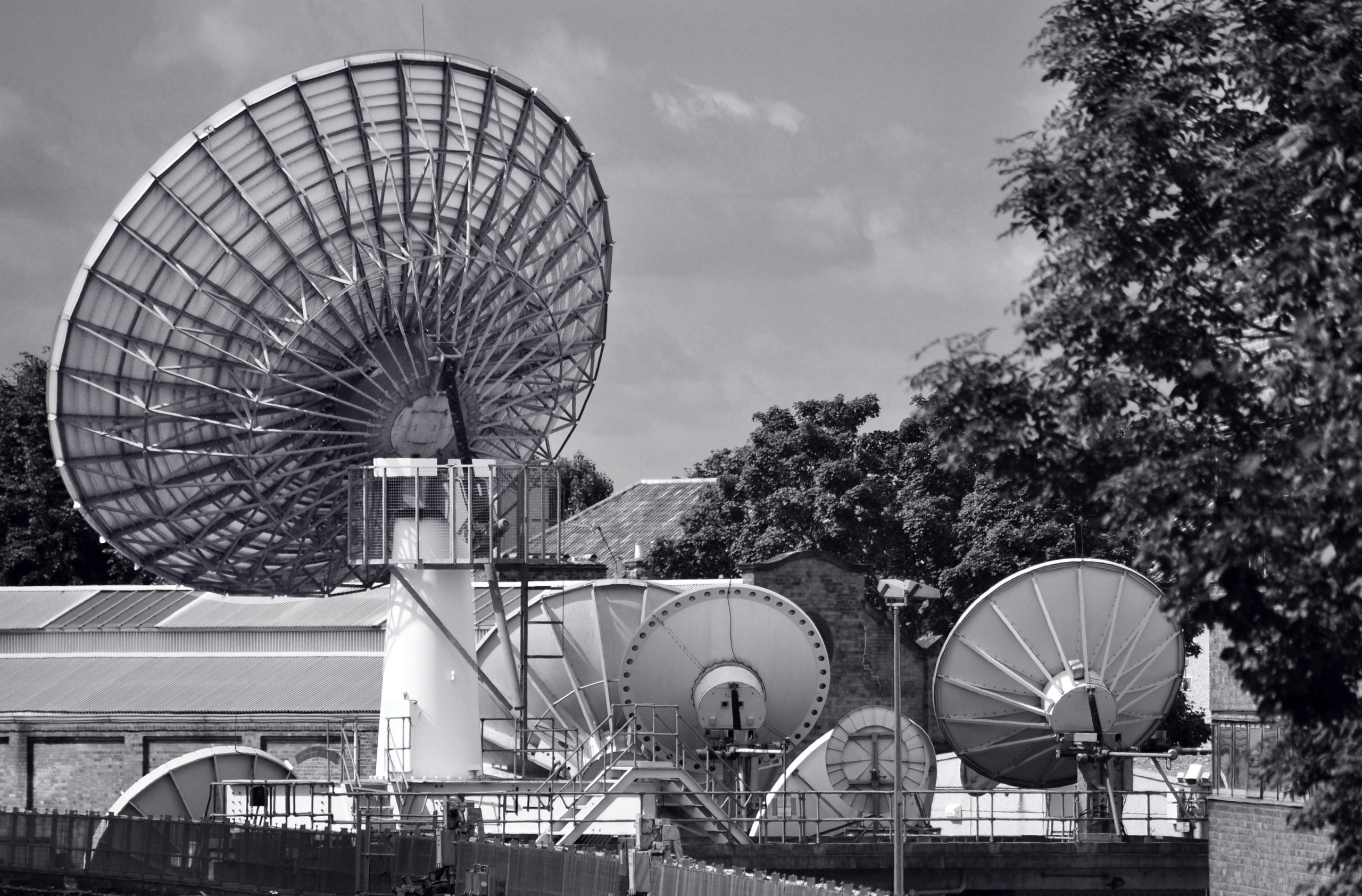
Image credits: “BBC TV Centre / Antennas” by Images George Rex is licensed under CC BY-SA 2.0.