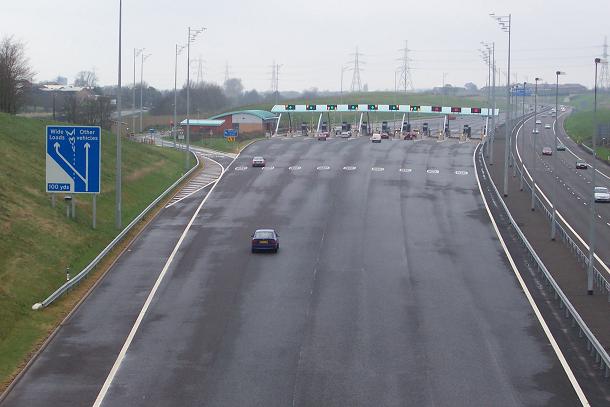
What is it that LEO constellations have to do with toll roads?
Spoiler: arguably, not much. But hopefully the title caught your attention.
Key takeaways
- LEO constellations behave like infrastructure assets — despite their tech novelty, they face the same capital intensity, scalability, and lifecycle dynamics as, for instance, toll roads.
- Project finance is a natural fit — funding can be structured around future cash flows, not sponsor balance sheets, easing the burden of multi‑billion investments.
- A massive untapped demand exists — billions remain unconnected, and satellites uniquely overcome the economics constraints of terrestrial networks.
- High barriers create scarcity and defensibility — orbital slots, spectrum, and regulation limit competition, reinforcing long-term value.
- Risk can be efficiently distributed — engineering, launch, operations, and revenue risks can be allocated to specialised counterparties and insurers.
- Stable returns + exit optionality — long-term wholesale contracts enable predictable cash flows and dividends, while de‑risking opens attractive exit or acquisition opportunities.
The catalyst
On 18 June 2026, The Economic Times reported that Jio, the largest telecommunications company in India, plans to launch a constellation of around 1,600–1,650 Low Earth Orbit satellites, with an estimated cost of $10–15 billion and a development timeline of roughly three years. Its proposed differentiation is the notion of sovereignty: data generated in India would be routed and processed through infrastructure located within India.
To put this into perspective, Jio’s profit after tax for the financial year ending March 31, 2026 was approximately $3.6–3.7 billion, while its net debt stood at roughly $3.3 billion. This means the company would need to raise capital equivalent to several multiples of its annual profit or existing debt to fund such an initiative. It is therefore unsurprising that Jio may look to the Indian government as a partner or co‑investor.
But that shouldn’t be the only answer.
Why the analogy?
The comparison between LEO constellations and toll roads was intentional, though not because they share technological similarities. The connection lies in how both can be financed. Specifically, they lend themselves well to a project finance approach.
What is project finance?
Project finance is a way of funding large-scale infrastructure where a standalone entity—typically a Special Purpose Vehicle (SPV)—is created to own and operate the asset. The defining feature is that debt is repaid solely from the future cash flows generated by the project itself, and lenders have limited or no recourse to the balance sheet of the sponsoring company.
In simple terms, the project must stand on its own: its financing depends on its ability to generate predictable and sufficient cash flows over time.
This model has long been associated with infrastructure such as toll roads, airports, and power plants. These assets share a number of characteristics that make them particularly suitable for this type of financing—and those same characteristics are increasingly visible in LEO constellations.
From toll roads to satellites
Toll roads work well under a project finance model largely because they serve an identifiable and relatively stable demand. They are built to solve clear problems—congestion, connectivity gaps, or inefficient transport networks. As a result, traffic volumes, while not entirely risk-free, can be forecast with a reasonable degree of confidence. This predictability is fundamental, as it underpins the repayment of long-term debt.
LEO constellations, particularly when focused on broadband and non-terrestrial networks, exhibit a similar dynamic. Despite years of public policy aimed at universal connectivity, approximately 2.2 billion people globally remain offline, including over 400 million in India alone. The primary barrier is not lack of demand but the economics of terrestrial infrastructure: rural, remote, or low-density regions are often too costly to serve with fibre or mobile networks.
Satellite systems change that equation. Once in orbit, they can provide coverage regardless of geography or population density. In that sense, they unlock latent demand in a way that is structurally similar to a toll road opening a previously inaccessible route.
Scarcity and barriers to entry
Both toll roads and satellite constellations are characterised by high barriers to entry. Building a road requires concessions, planning approvals, and significant upfront capital. Similarly, launching a constellation involves not only large financial commitments but also access to scarce orbital slots, spectrum licences, and regulatory approvals.
Even deep-pocketed corporations cannot indefinitely absorb such capital intensity without considering financial structure. Over time, the increasing scale of investment required—and the constraints imposed by regulation and orbital limits—create a more disciplined environment where structured financing becomes more attractive.
Allocating risk where it belongs
One of the core strengths of project finance is the ability to allocate risk to the parties best equipped to manage it. In a toll road project, construction risk may sit with an EPC contractor, operational risk with a specialised operator, and traffic risk may be partially shared with the public sector through guarantees or availability payments.
A similar approach can be applied to LEO constellations. The complexity of manufacturing satellites, launching them, integrating non-terrestrial network capabilities, and operating the system at scale introduces a wide range of risks. A project finance structure allows these risks to be distributed across engineering firms, launch providers, operators, and insurers, rather than concentrated on a single sponsor’s balance sheet.
Cash flows, stability, and dividends
Infrastructure assets typically generate long-term, predictable cash flows once operational. In toll roads, revenue is derived from user fees or availability payments backed by contractual frameworks. This stability supports higher leverage and enables investors to receive steady, bond-like returns.
For LEO constellations, a comparable model can emerge through wholesale agreements with mobile network operators (MNOs) and internet service providers (ISPs). These players have strong incentives to secure long-term capacity at predictable prices, often through offtake agreements. Such arrangements can provide the same level of visibility on revenues that lenders and investors require.
When combined with disciplined cost control and risk mitigation, this leads to predictable financial performance and the ability to distribute dividends in a stable and reliable manner—an attractive proposition for infrastructure investors such as pension funds and sovereign wealth funds.
The option to exit
Another feature of project finance is the embedded option value. Once construction risks are removed and the asset begins to generate stable cash flows, it becomes significantly more valuable as a de-risked investment. Sponsors can then choose to sell their stake, partially or entirely, often at higher multiples.
This model is well established in fibre networks, where operators frequently step back during the capital-intensive build phase but retain options to reacquire the asset later, once depreciation has reduced its book value and cash flows have stabilised.
There is no reason why LEO constellations could not follow a similar path.
Final thought
While LEO constellations are often framed as cutting-edge technology, they are, at their core, infrastructure assets. As the sector matures and competition intensifies, the initial strategic premium attached to being a first mover is likely to erode. Capital requirements will remain high, and pressure on balance sheets will increase.
In that context, project finance offers a natural evolution: a way to fund these systems efficiently, allocate risks appropriately, and attract long-term capital.
If you are interested in developing project finance concepts for LEO satellite constellations, simulating deal structures, or building the supporting technical and financial models, feel free to reach out.
DIGIECON Direct to Satellite (D2S) Intelligence combines deep understanding of the space segment with hands-on experience in telecom infrastructure financing and advanced modelling capabilities. contact@digiecon.com
Image credits: “M6 Toll plaza, Great Wyrley” by Adrian Bailey is licensed under CC BY-SA 2.0.